

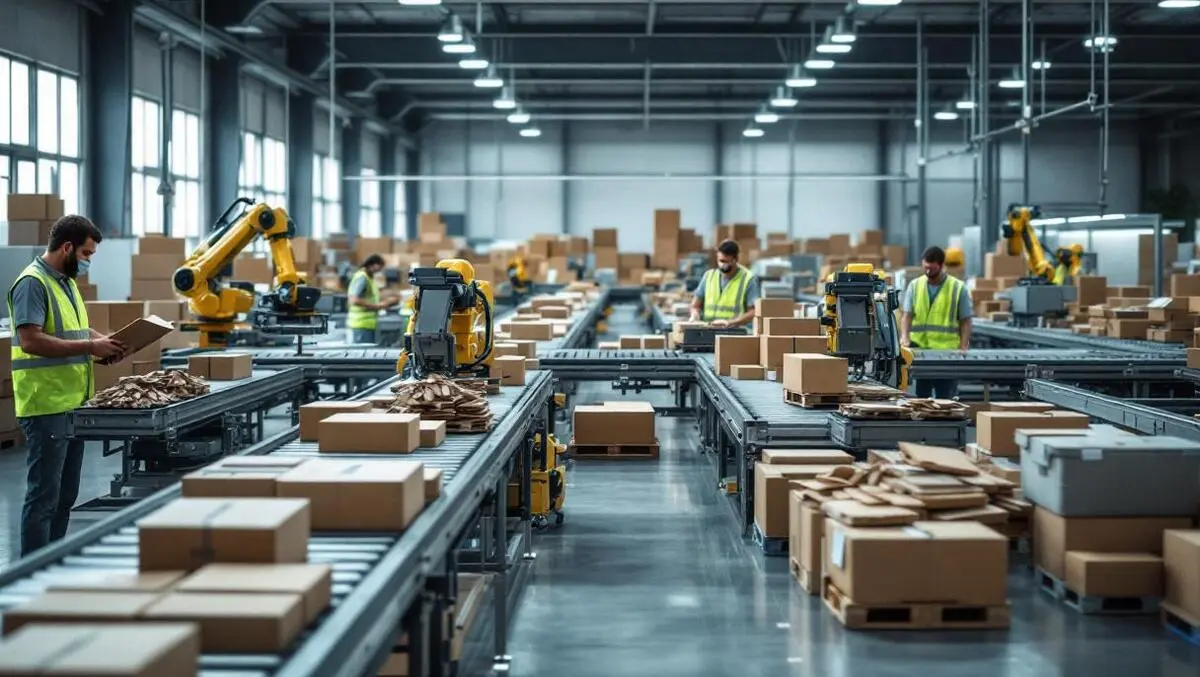

Retailers are preparing for a year of change in 2026 as advances in machine learning, tighter packaging rules and shifting consumer behaviour reshape both eCommerce fulfilment and the way returns are handled.
Industry specialists expect a sharper focus on warehouse productivity and personalisation on the outbound side. Returns operations are set for a push on customer experience, salvage and reCommerce, driven by regulation and marketplace growth.
Warehouse automation
Andrew Scanlon, Head of Sales and Marketing at multichannel logistics and fulfilment providers Staci, Radial and Active Ants, said retailers face rising pressure from value-conscious customers who want faster and cheaper deliveries. That pressure is driving renewed efforts to improve the accuracy and speed of picking in distribution centres.
"Improving picking speeds and accuracy are a reoccurring fulfilment trend, but we are likely to see a heightened focus on this in 2026, with greater investment and innovation in Machine Learning (ML). Value-conscious consumers and shopper demand for faster, cheaper deliveries are challenging retailers and brands to find new efficiencies during fulfilment. Optimising order picking can save significant time and costs," said Scanlon.
He said newer warehouse management systems use machine learning and genetic algorithms to design smarter workflows. Stock is moved continually within automated systems so that items sit closer to where staff or robots pick them.
"Advances in ML are redefining Warehouse Management Systems (WMS), creating smarter workflows that are powered by genetic algorithms. Integrated, automated systems are constantly moving and positioning stock inventory, so products are always in a prime position for picking. Fulfilment is becoming faster and slicker, with capacity to increase picks-per-hour, while maintaining high levels of quality control and standards."
Unboxing and social
Scanlon expects post-purchase personalisation to increase as social commerce grows and shoppers change buying habits. NielsenIQ figures show eCommerce in Europe growing by 5%. The data indicates customers buy more often and put more items in each online basket, while the average price per item falls.
"Growth in social commerce and changing eCommerce habits are likely to drive growth in on-pack and in-pack personalisation. NielsenIQ has previously reported that eCommerce in Europe is growing by 5%, with increased frequency of purchasing and a higher number of items per basket, but a decline in the average item price," said Scanlon.
He pointed to categories such as health and beauty and fashion, where social platforms now influence discovery and purchase. TikTok users who shop spend 20% more than the average online shopper, according to the data.
"Data also shows the popularity of social commerce, especially in health and beauty, and fashion. TikTok Shoppers, for example, spend 20% more than the average online shopper. Post-purchase personalisation offers huge potential for retailers and brands to leverage the visual, sharing and virality of social commerce. Customised packaging and promotions can super-charge unboxing, helping businesses to boost brand awareness. Personalisation can also drive cross-selling and upselling, enabling retailers and brands to grow basket values and repeat purchasing," said Scanlon.
He said fulfilment operations will use machine learning and shopper data more extensively. Automation and digital tools will sit alongside human workers.
"E-commerce fulfilment strategies will continue to utilise machine learning and shopper data, while blending automation and digitalisation with human operatives to enable relevant personalisation."
Packaging under pressure
Scanlon also highlighted packaging as a priority as regulators clamp down on waste. In the UK, the packaging Extended Producer Responsibility scheme increases costs for companies that place packaging on the market. The EU's Packaging and Packaging Waste Regulation targets oversizing and overpackaging for goods sold across the bloc.
"Legislative changes will see more and more fulfilment providers working with retailers and brands to reduce the size and volume of eCommerce packaging. In the UK, the packaging Extended Producer Responsibility scheme is putting more pressure on margins, as businesses face fees to cover the costs of packaging waste. The EU's Packaging and Packaging Waste Regulation is also striving to reduce waste by addressing pack sizes and overpackaging, with this impacting businesses that sell packaged products across Europe, including UK companies," said Scanlon.
He said fulfilment providers use data on orders and warehouse workflows to adjust pack sizes.
"Fulfilment partners are able to draw on data and insight that can rightsize pack sizes, without compromising functionality and performance. In many cases, knowledge of picking and packing processes will help to improve packaging efficiencies and increase throughput speeds."
Returns priorities
On the returns side, research by Advanced Supply Chain and ReBound by Reconomy suggests retailers will treat reverse logistics as a more strategic part of the customer journey in 2026. The companies surveyed 901 senior supply chain decision makers across the UK, USA, Italy, France, Germany and Spain.
Improving customer service emerged as the top returns priority for 22% of respondents. Supply chain executives set goals that include faster returns handling, lower shopper costs and shorter refund lead times.
At the same time, 19% of businesses want higher salvage rates on returned goods. A third of respondents plan to outsource returns processing next year as they seek better repair and restoration. Extended Producer Responsibility schemes influence 18% of businesses as they rework returns processes and reCommerce models. Around 27% say they will prioritise reCommerce in 2026, and 32% focus on routing items that cannot be repaired into recycling streams.
Local and circular
Marketplace growth is widening international reach for brands, and returns processes are starting to follow. Some 35% of supply chain professionals rank local returns consolidation as a priority. A fifth are working on duty drawback from cross-border returns as part of efforts to monetise returned inventory.
The data shows 18% of businesses are adjusting strategies to generate more revenue from returns. They focus on shorter times to move goods back into stock, and on reducing fraud-related losses.
Advanced Supply Chain and ReBound said greater marketplace use and rising interest in sustainability and reCommerce risk adding complexity to returns flows.
"Growing consumer preferences for marketplaces, reCommerce and sustainability can increase the complexities of goods being sent back by shoppers. There's a risk of reverse logistics processes becoming longer and more fragmented, and this occurring at a time when legislation and consumers increasingly require supply chains to be more resourceful. Businesses are embracing this as an opportunity to rethink returns strategies.
"Emphasis is being placed on treating returns as a strategic driver for supporting sales, customer satisfaction, sustainable practices and cost management. Sophisticated tech is enabling this and it's why, for example, we see around a third of professionals (31%) prioritising portals for eCommerce returns, and technical capabilities ranking highly during the outsourcing of returns," said Alexandra Romantseva, Head of Marketing at ReBound and Advanced Supply Chain.
She said retailers that treat returns as a data-rich part of the supply chain can address waste and compliance.
"Forward-thinking businesses view returns as a supply chain hot spot for advancing circularity. Clearly defined salvage rates and robust quality inspections, backed up by returns management software and systems that enable connectivity and enrich supply chain data, can minimise waste and errors. This is why there's such a strong focus on salvaging and localising returns - trends that are likely to grow alongside the popularity of marketplaces and reCommerce," said Greenfield.