

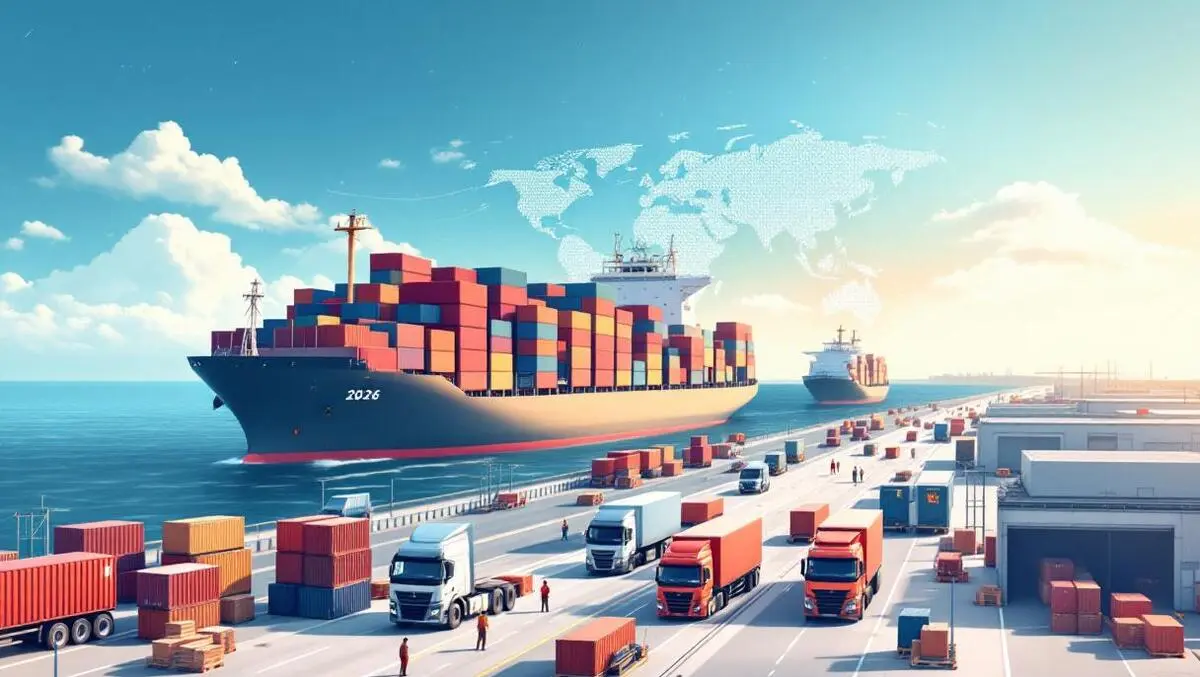
CCL predicts resilient growth in global trade in 2026
Wed, 7th Jan 2026
CCL has forecast continued growth in global trade in 2026, despite a subdued international outlook and persistent geopolitical and tariff risks.
The UK-based logistics and customs brokerage company said it expected businesses that trade across borders to see further expansion next year. The firm cited the adaptability of exporters and importers and the evolution of supply chains following recent shocks.
Global trade volumes have faced pressure from inflation, higher interest rates and shifting trade policies in recent years. Disruptions in shipping lanes and rising protectionism have also affected supply chains and delivery times.
Stuart Campey, Chief Executive Officer at CCL, said cross-border trade had proven robust despite these headwinds.
"Cross-border trade has encountered roadblocks over the past few years and its continued growth throughout demonstrates the resilience of global businesses. We believe that 2026 - despite many trade complexities still being present - will be a year of continued growth as businesses adapt towards stronger supply chains and smarter logistics," said Stuart Campey, CEO, CCL.
Recent analysis from Allianz Trade points to only modest expansion in global commerce. Its Economic Outlook Report for 2026 forecasts world trade growth of 0.6% that year. That figure underlines the impact of ongoing trade disputes, tariff changes and political uncertainty on supply chain confidence.
CCL acknowledged that softer aggregate growth and uneven regional demand would keep conditions challenging. The company pointed to disputes and tariff uncertainties linked to the US as a particular drag on planning and investment for many exporters.
CCL said businesses could still increase overseas sales in such an environment. The company highlighted diversification of sourcing as a key response. It said firms were now spreading procurement across a wider mix of suppliers in different countries. That trend aims to reduce exposure to any single route, market or regulatory regime.
The logistics provider also drew attention to shifts in supply chain design. Companies are reviewing inventory policies, warehousing locations and transport modes. Many are seeking shorter transit times and more predictable lead times rather than lowest-cost routes alone.
Supply chain focus
CCL said that stronger supply chains would support growth for exporters and importers in 2026. The firm expects more businesses to reassess their logistics networks as they respond to new regulations and customer expectations.
Digital tools and data are playing a larger role in those adjustments. Many operators are using shipment tracking, customs data integration and route planning software. These tools provide more visibility over consignments and border processes.
Campey said investments in resilience and logistics strategy were becoming a dividing line between businesses.
"In today's fast-moving global trade environment, the businesses that succeed are those that invest in stronger, more resilient supply chains and adopt smarter logistics strategies. By doing so, they not only navigate complexities and stay ahead of the competition, but also reduce costs and ensure goods reach their destinations efficiently and reliably to satisfy customer demand," said Campey.
CCL said demand from eCommerce retailers remained a significant driver of cross-border flows. Online sellers continue to expand into new markets and seek faster delivery times. This creates additional customs and logistics complexity, especially for smaller firms.
CCL's operations
CCL has operated since 1999. The company works with eCommerce retailers and delivery providers that trade into and out of the UK and the Eurozone. It offers customs brokerage and logistics services for parcels and freight.
The business runs an External Temporary Storage Facility near major transport links. It handles cross-border eCommerce goods entering Europe by air, sea, road and rail. It also works with partners in other regions, which supports consolidated shipments and customs clearance.
CCL said it structures its services around integrated handling of customs, warehousing and onward distribution. The firm arranges tailored logistics solutions that reflect customer product types, volumes and destination markets.
Campey said the company's focus remained on reducing delays and uncertainty in cross-border trade.
"Our mission has always been to remove friction from cross-border trade. As the landscape evolves in 2026, we will continue supporting businesses with logistics solutions tailored to overcome their transport challenges - helping them move goods faster, more efficiently and more cost-effectively," said Campey.
CCL expects demand for customs and logistics support from small and mid-sized exporters to rise as trade rules, tariffs and consumer delivery expectations continue to change in 2026.