


Finance teams still rely on manual accounts payable
Wed, 3rd Jun 2026.webp)
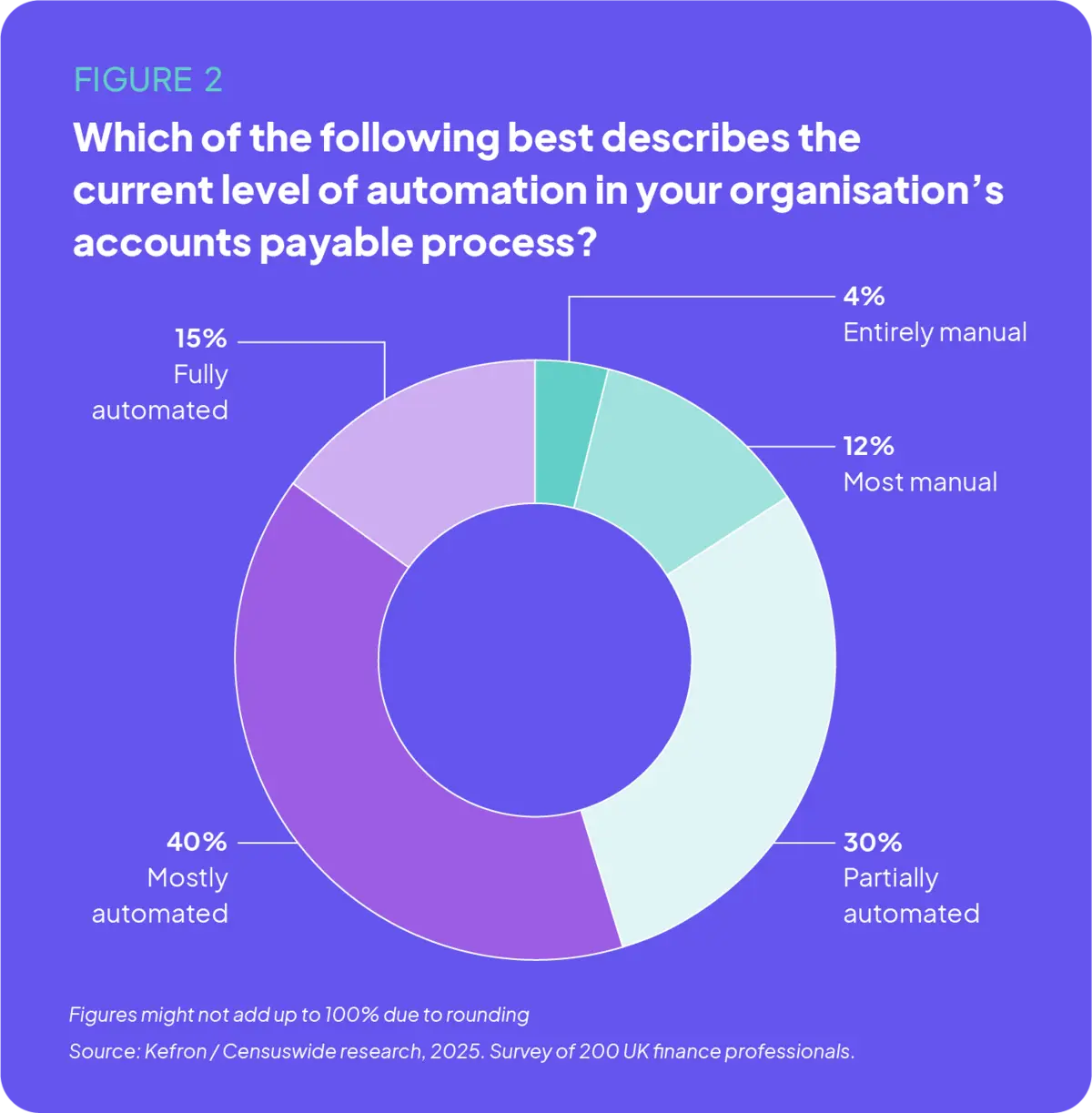
Kefron has published research showing that most finance teams still rely on manual intervention in accounts payable, with only 15% of surveyed companies saying the process is fully automated.
The study highlights a gap between the demands on finance departments and the systems many still use to manage invoices, approvals and reporting. Based on a survey of 200 UK finance leaders and accounts payable managers, it found that 85% of finance teams depend on manual input at some stage of the accounts payable process.
That reliance appears to shape how finance leaders view growth. Eight in 10 chief financial officers surveyed said manual accounts payable makes it harder to scale finance operations efficiently, while 84% said artificial intelligence will free finance teams to focus on more strategic work.
Kefron, which sells accounts payable automation software, said the findings suggest manual processes built up over time are creating operational strain as invoice volumes rise and compliance demands increase. The research also linked pressure on accounts payable teams to changes in enterprise resource planning systems, which can add complexity in approval and reporting workflows.
Pressure points
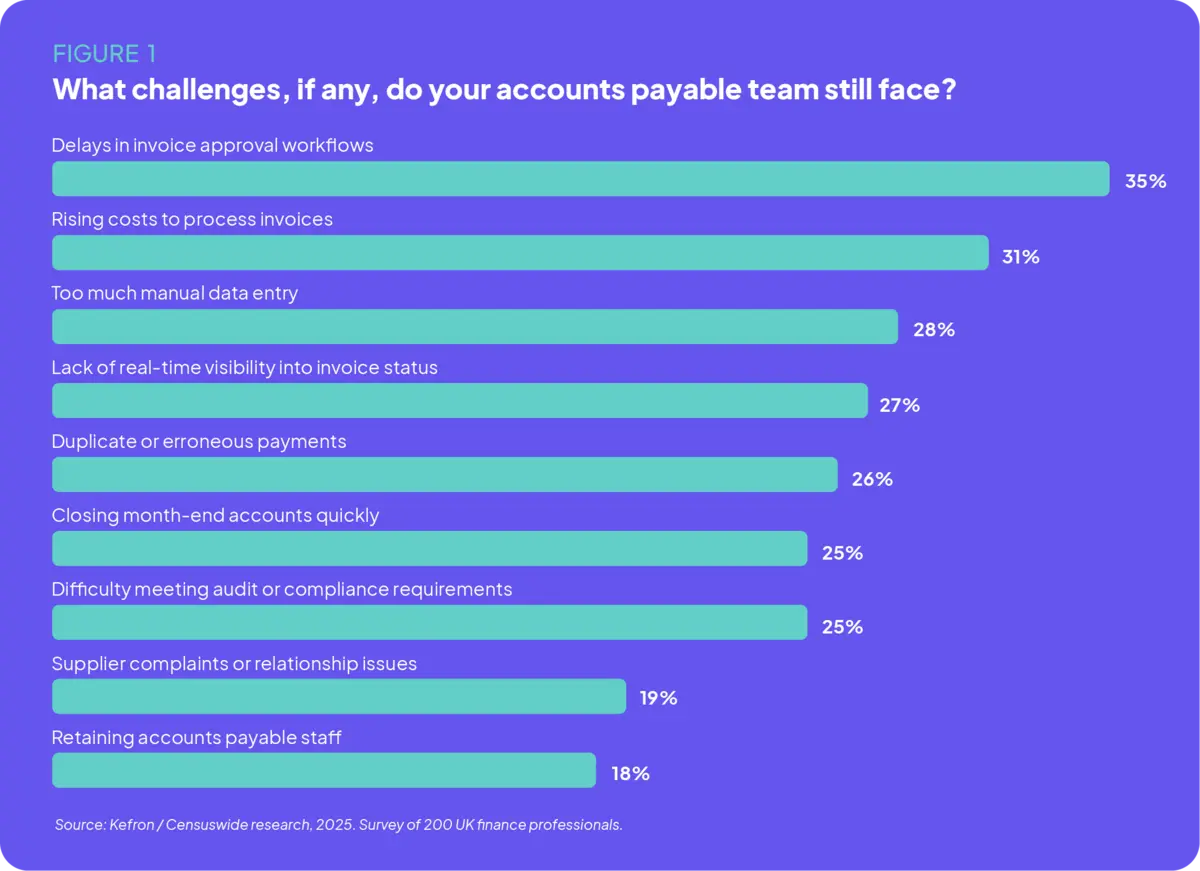
The most common problem was delays in invoice approval workflows, cited by 35% of respondents. Rising invoice processing costs followed at 31%, while 28% pointed to excessive manual data entry.
A lack of real-time visibility into invoice status was named by 27% of respondents, and 26% said duplicate or erroneous payments were a key issue.
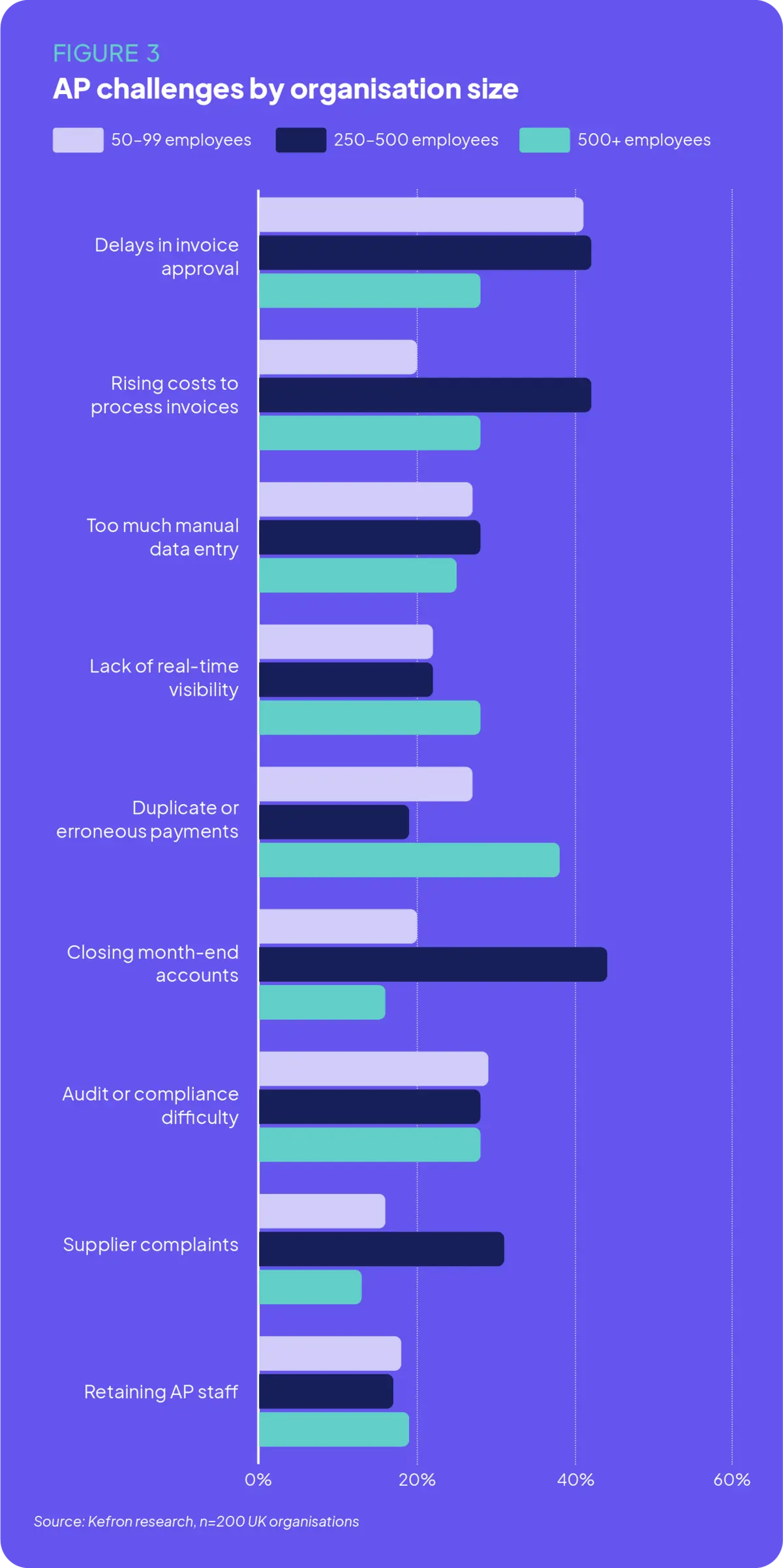
The report also highlighted broader concerns around month-end close and audit or compliance demands. Together, the findings suggest accounts payable remains a weak point for many organisations despite wider investment in finance technology.
Supplier relationships also featured in the responses. The research found that 90% of chief financial officers believe efficient accounts payable processes strengthen supplier relationships, while 77% of finance professionals said automation reduces compliance risk.
Executive view
Paul Kearns commented on the findings.
"The research shows that finance teams and CFOs do not have the real-time insights needed to run a business at full efficiency. More than half of finance professionals agree that they're more likely to crack time travel than crack real-time AP control, demonstrating a real lack of confidence in automation procedures. As organisations grow, these manual and partially automated AP processes become a barrier to scalability, resilience and agility," said Paul Kearns, Chief Executive Officer of Kefron.
The results add to a wider debate in finance over how quickly back-office processes are adapting to digital tools. While invoice capture has been automated in parts of many organisations, the data suggests end-to-end processing remains incomplete in most cases.
That matters because accounts payable affects areas beyond the finance function. Delayed approvals can slow supplier payments, poor visibility can weaken cashflow planning, and manual intervention can increase the risk of errors that later require correction or create audit issues.
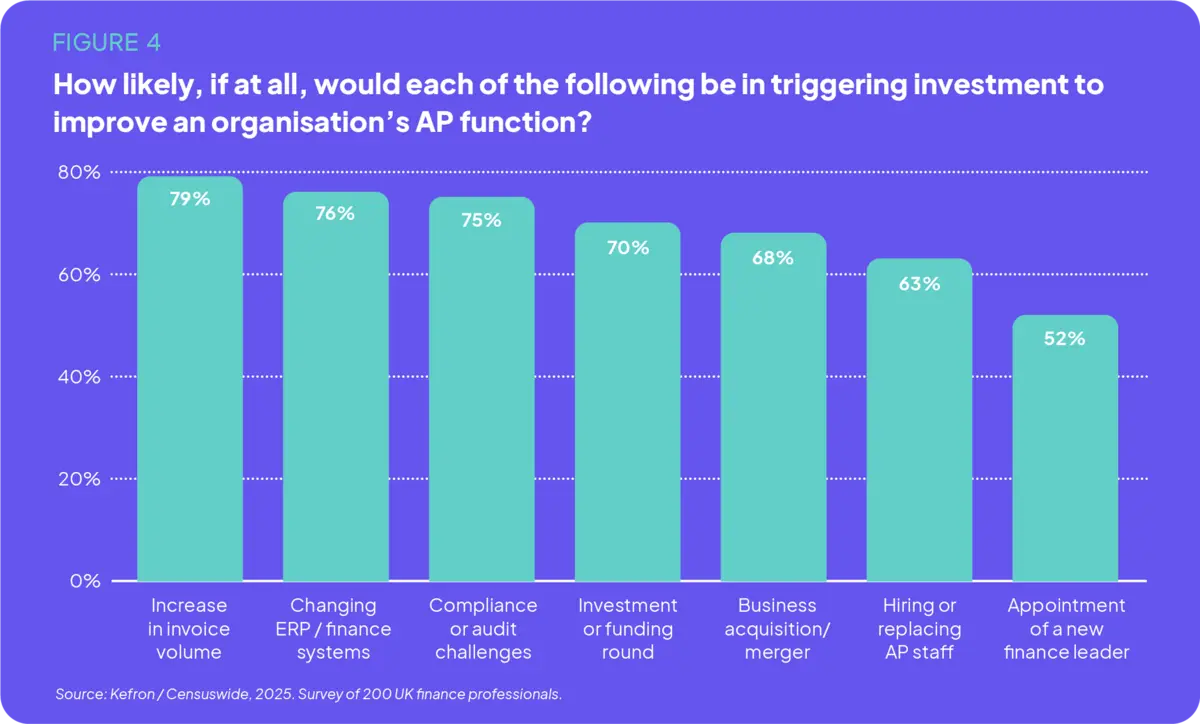
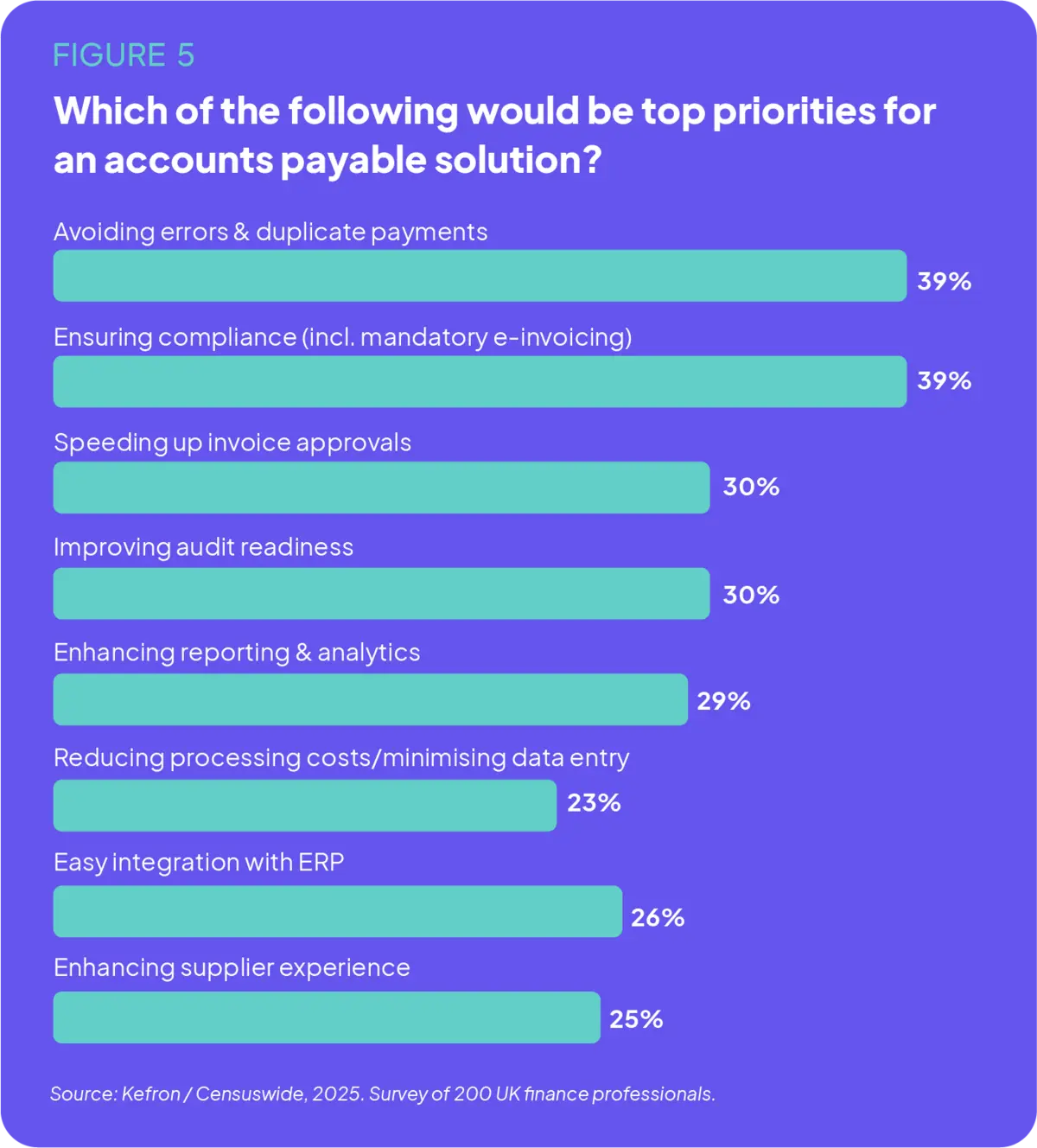
Kefron said organisations are looking for systems that can support business expansion, adapt to changes in core finance software and provide stronger visibility over invoices and approvals. It argued that businesses are no longer focused only on digitising invoice capture, but on improving control and reporting across the process.
The survey covered heads of finance, chief financial officers, finance managers and accounts payable managers across sectors including manufacturing, retail, health, hospitality, construction, financial services, energy and telecommunications. It was conducted in the UK.
The findings suggest many finance teams are still working between older manual practices and newer automation tools, creating gaps in control and speed. For companies trying to manage growth, those gaps are being felt most clearly in approvals, cost, visibility and payment accuracy.