

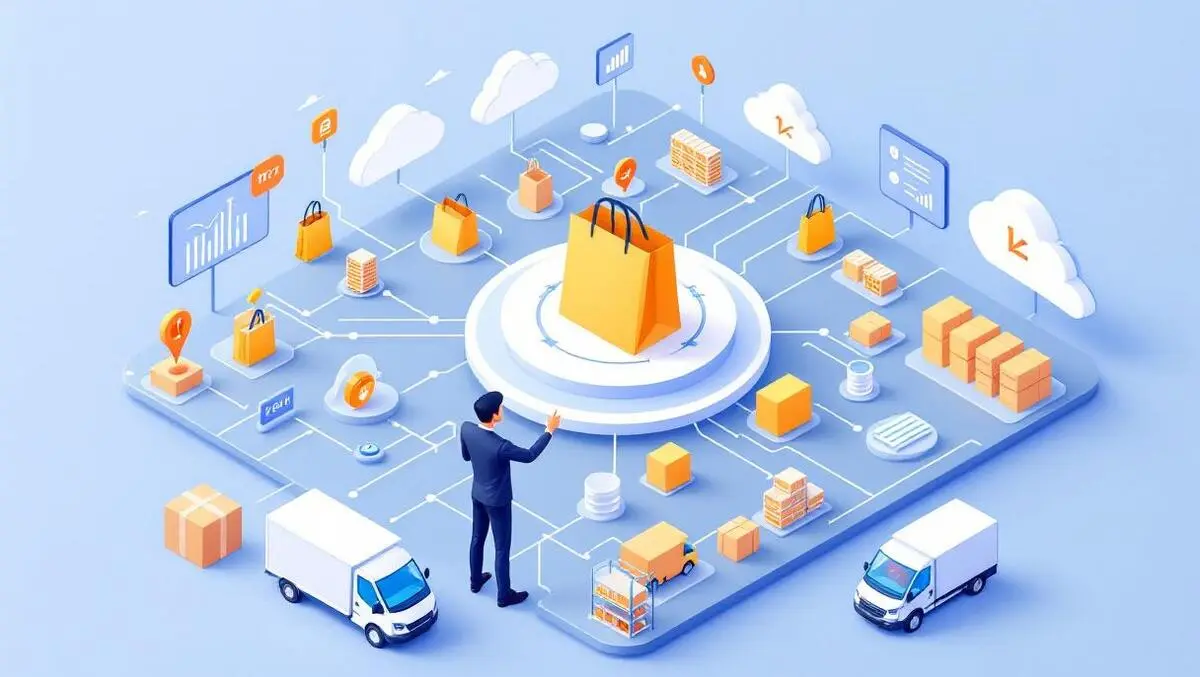
Patchworks unveils MCP to plug AI into live retail ops
Mon, 12th Jan 2026
Patchworks has launched a version of the Model Context Protocol aimed at retail AI agents, positioning its integration platform as a route for AI tools to connect with live operational systems.
The company said retailers increasingly use AI agents but many tools still sit outside the platforms that process orders, manage inventory, and run logistics. Patchworks said this limits AI systems to summarising information and making recommendations.
MCP launch
Patchworks MCP works with the Patchworks integration platform. The company said it gives AI assistants and automation tools a way to query data, monitor workflows, troubleshoot issues, and orchestrate actions across retail systems in real time.
Patchworks said MCP uses an API-first architecture. The company said it works directly with Patchworks-managed integrations.
Patchworks framed the product around the operational gap between AI tools and the systems retailers rely on. Many retailers run multiple platforms across eCommerce, enterprise resource planning, inventory management, and delivery operations. Integrations connect these services and move data between them.
Patchworks said MCP creates a standardised interface between a retailer's integration layer and AI assistants. The company said this approach avoids custom point-to-point integrations.
Jim Herbert, Chief Executive Officer, Patchworks, described the mismatch between expectations for AI agents and current deployment models in retail systems.
"Retailers are being told that AI agents are ready to transform operations, but in reality, most AI still sits outside the systems that matter," said Jim Herbert, CEO of Patchworks. "We introduced MCP for our customers to close that gap, and to give retail AI assistants and automation tools secure, real-time access to the systems and workflows that run the business."
Operational use
Patchworks said the product focuses on day-to-day processes that can break when data does not move cleanly between systems. These failures often show up in operational queues and logs across different platforms, which can slow incident response.
The company set out a series of use cases linked to commerce operations and integration management. It said customer support teams could ask an AI assistant to identify failed data flows between platforms and explain why. It cited an example focused on Shopify and NetSuite flows.
Patchworks said operations teams could use MCP to identify issues and take remedial action, including rerunning failed flows. It also pointed to anomaly detection across systems, framed as a conversational workflow.
For development teams, Patchworks said MCP could reduce manual work involved in troubleshooting by retrieving payload samples passing through specific integrations. The company described this as an alternative to searching logs directly.
Integration layer
Patchworks sells an integration platform built around commerce. Integration platforms typically sit between applications and manage data movement, transformation, and error handling.
Retailers often run a mix of SaaS tools and legacy systems across eCommerce, merchandising, inventory, ERP, customer relationship management, and fulfilment. That mix can create multiple integration points, with different data models and operational ownership across teams.
Patchworks said MCP links AI tools to this integration layer, rather than requiring direct connections from an AI assistant into each operational system. The company said this provides access to "real-time operational context" across commerce platforms, ERPs, inventory systems, and logistics environments.
Shopify context
Patchworks also pointed to activity in the Shopify ecosystem. The company said Shopify featured Patchworks in Shopify Editions Winter '26 in the B2B and ERP Integrations category.
Shopify has expanded its native B2B features, and retailers increasingly run both direct-to-consumer and B2B operations on the platform. Patchworks said this shift increases complexity in back-end integration work, particularly around ERP connections and downstream systems.
Patchworks said it supports merchants that aim to connect Shopify with ERP systems and other services used across order management and fulfilment. The company said these integrations support B2B workflows and operational visibility across connected systems.
Retail event
Patchworks said it will demonstrate MCP at NRF 2026: Retail's Big Show. The company said it plans to show how AI tools can work with existing integrations in real operational scenarios.
Patchworks said the demonstration will focus on querying data, monitoring workflows, troubleshooting issues, and triggering actions across retail systems in real time.