

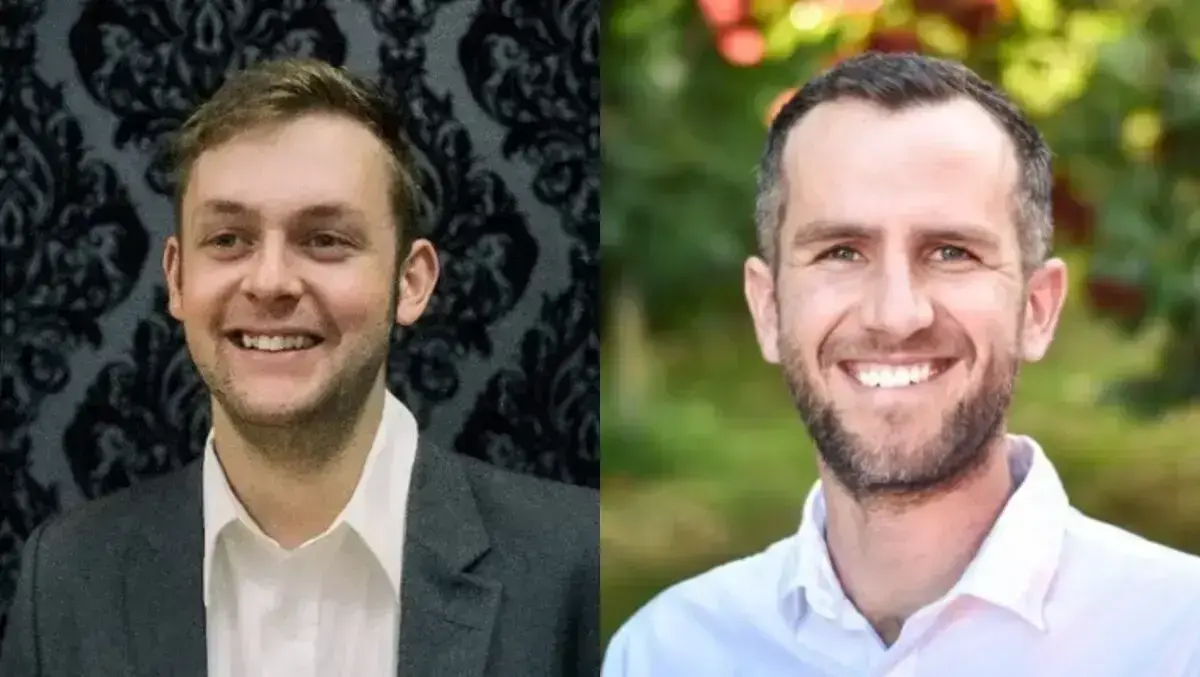
Partly raises USD $50 million to fuel US expansion
Tue, 30th Jun 2026.webp)
Partly has raised USD $50 million in a Series B funding round led by DST Global Partners, valuing the automotive software company at USD $500 million.
It is also expanding into the US, with its American operations based in Austin, Texas.
Headquartered in the UK, Partly develops an artificial intelligence model called Interpreter for the automotive repair supply chain. The model has been trained over five years using human feedback, synthetic data and information gathered through more than 50 manufacturer agreements, alongside live operational data.
The funding comes as software suppliers and insurers look for ways to reduce delays and administrative errors in vehicle repairs. Partly says the US collision repair market is worth more than USD $100 billion and still relies heavily on manual processes and fragmented information.
US push
Austin will serve as the centre of Partly's US operations as it targets what it describes as roughly 250,000 repairers in the market. Its core executive team, including Chief Executive Officer and Co-founder Levi Fawcett, has relocated, and the company is hiring in engineering, business development and product management.
The move gives Partly a base in the world's largest auto repair market as it tries to turn a specialist data model into a broader commercial business. The company argues that vehicle repairs are often slowed not by workshop labour itself, but by difficulty identifying the right parts, handling documentation and resolving supply chain mismatches.
That has created an opening for companies that can standardise parts data across manufacturers, repairers and distributors. In collision repair, delays can increase costs for insurers, prolong downtime for drivers and add pressure across body shops and supply networks.
DST Global Partners is known for backing large technology companies including Anthropic, Meta, Alibaba, Airbnb and Spotify. Its decision to lead the round marks a significant endorsement of a company operating in a narrower industrial niche rather than a broad consumer or general-purpose software category.
Industry problem
Partly's founders argue that automotive parts data remains inconsistent and difficult to use at scale. Different naming conventions, incomplete records and the lack of a common framework across suppliers have made automation harder in repair workflows than in some other sectors.
Fawcett set out the company's view of the opportunity in comments announcing the raise.
"Not since the creation of the assembly line or EVs has the auto industry experienced significant innovation that simultaneously improves operational efficiency, industry profitability, and consumer value", said Levi Fawcett, Chief Executive Officer and Co-founder, Partly.
"We have spent five years building the AI infrastructure layer that the industry has been missing. The model architecture is extremely nuanced, there's a reason general models don't solve it, and why we've been able to own the frontier AI here," Fawcett said.
Tony Austin, Partly's other Co-founder, linked the problem more directly to the day-to-day repair process.
"When a car repair stalls, it's rarely the skill of the repairer, it's the wrong part, missing information or admin piling up that stretches the time between the problem and getting the car back on the road. This friction costs the industry around $2 trillion annually. I spent years inside the automotive industry experiencing this problem from almost every angle, which is what led to founding Partly. Six years, billions of data points and part relationships later, Interpreter is delivering significant reductions in supplementaries and repair time for thousands of businesses worldwide. This is what AI should actually do beyond the hype: make a measurable difference in someone's working day," Austin said.
Data and hiring
Partly says its model was built specifically for the automotive industry rather than adapted from a general-purpose chatbot or search product. That distinction matters because repair and parts matching often involve complex relationships between text, images, manufacturer records and workshop documentation, where mistakes can have cost and safety implications.
Vice President of Engineering Tim Grunshaw described the technical challenge in detail.
"We are training a frontier model for how the physical world is built and repaired. Interpreter is a domain-specific frontier model for the automotive world: deep, hard, and badly underserved territory, with messy multimodal data, expert reasoning, and high-stakes decisions where the answer has to be correct and explainable, not just plausible. There is no shared data layer, no common language for parts, and no playbook to copy - this is category creation in a market that still runs on phone calls and PDFs. Our edge is deep proprietary automotive data and serious compute. We hire the top one percent of talent, and we are looking for ML Research Engineers and Software Engineers who want to do the best work of their lives on AI grounded in the physical world," Grunshaw said.
The new capital gives Partly more room to expand in a market where specialist software groups, insurers and automotive suppliers are all trying to bring more structure to repair workflows. Its progress in the US will depend on whether workshops, distributors and other industry participants are willing to adopt a common, data-driven approach in a sector that still runs on phone calls and PDFs.