

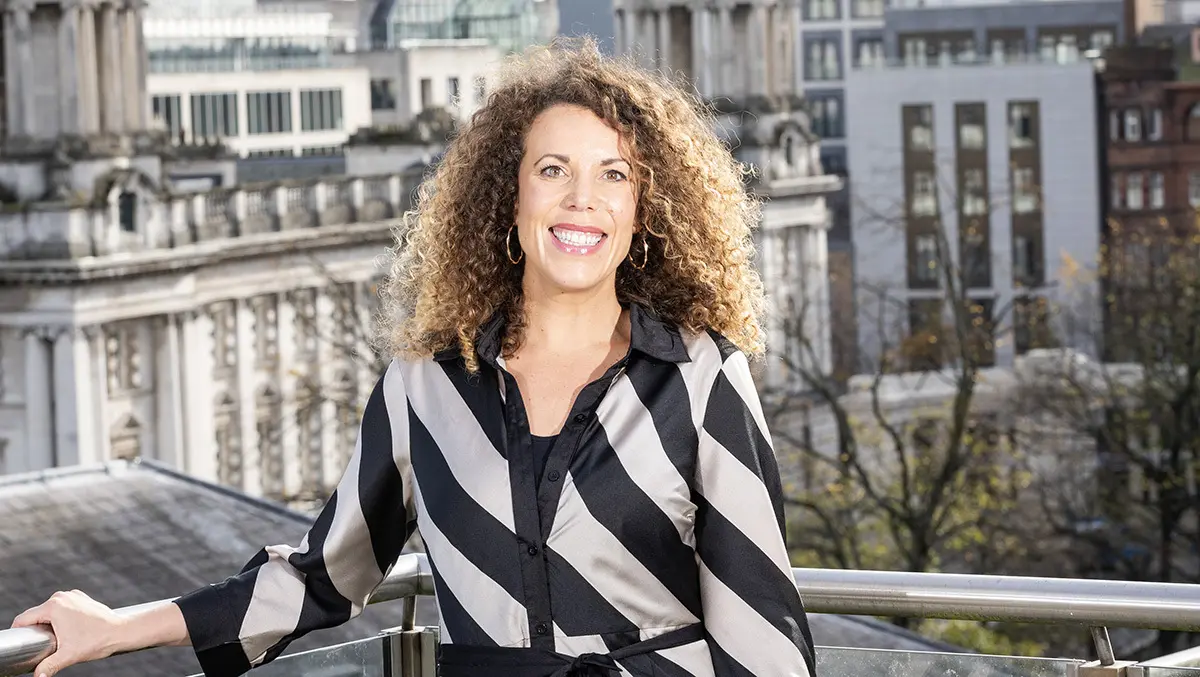
As a female founder in a tech company, many of us know the feeling of being the only woman in a room full of investors or at a founder networking event. You learn to read the way people respond to you, the way your ideas land differently, or you have to prove your credibility twice. Those rooms shape the direction of our tech economy and too often, they're missing half the talent.
As International Women's Day approaches, it gives many women tech founders the chance to reflect on the progress we've made - and the gaps that still remain. It made me reflect on how inclusive economic growth needs more tech more than ever. The global gender gap in economic participation is still significant. At current rates, the World Economic Forum estimates it will take over 130 years to close. This is where technology can step in, beyond just reshaping industries, it's reshaping who gets to participate in them.
Why women in tech still start behind the line
Like many female founders of tech platforms before me, I faced the challenge that women-owned technology companies tend to face. Less access to capital, less visibility and trust and limited access to corporate supply chains. Women receive less than 2% of global VC funding, despite women-owned startups having statistically better outcomes than male-owned startups. Emmie Faust's recent Rise report also highlights the same pattern - 45% of female founders identify funding access as their primary barrier. The talent is there but the pathways aren't.
In the UK, women-led businesses contribute around £85 billion to the economy annually, but could add an extra £250 billion if they had equal access to opportunities. This leaves an obvious problem: the talent and innovation exist, but the infrastructure to support these women does not. Small businesses founded by women are let down by tech in a lot of ways. Search and recommendation tools often favour big brands. A small woman‑run business can have brilliant, handmade products, but the algorithm might still push larger companies to the top because they already have more clicks and traffic. It becomes a loop that lets the same players win. AI tools can repeat old biases too. If the data behind an AI model is full of gaps, it can overlook women‑owned businesses. This doesn't come down to a fairness issue, but an economic growth issue.
What happens when technology opens the door wider
Over the past few years, I've seen firsthand how the right technology can quietly but powerfully shift economic opportunity. One example: the independent makers and small businesses we work with (the majority of which are women-owned) have collectively generated around £3 million in revenue through our platform.
There's a ripple effect when this happens that benefits all of us. When an artist in Yorkshire or a chocolatier in Belfast lands a steady stream of corporate orders, it's boosting beyond their bottom line; it supports local jobs and helps people in local communities grow their businesses, even if no one's talking about it. Research shows that women reinvest up to 90% of their income back into their families and communities, so every pound that reaches these founders travels further than most people realise.
Sam Smith's Super Scalers research also shows that high‑growth businesses punch far above their weight in terms of economic impact. When women‑led companies get the chance to scale, it's transformative for local economies.
How tech levels the playing field
Technology and online eCommerce give opportunities to small, independent brands that would previously be overshadowed by big suppliers. When technology is built with fairness in mind, it has a real ability to level the playing field for smaller businesses. It cuts out a lot of the usual barriers, the endless paperwork, the need to constantly network while trying to balance childcare or even just breaking the barrier of "knowing the right people". Women founders are all too familiar with the feeling that certain opportunities are only for the big players.
Instead, it gives independent makers and founders a genuine chance to be seen. An independent maker can suddenly find themselves in front of buyers they'd never normally reach, without needing a huge marketing budget. And because so many of the time‑consuming tasks are automated, it frees people, especially women who are often juggling work, family, and everything in between, to focus on actually growing their business. It obviously doesn't solve every challenge, but it definitely helps even things out.
What inclusive tech looks like in practice
Inclusive tech can show up in the smallest of decisions, shaping who gets a fair chance. That is built in lots of different ways, for example, not automatically pushing the biggest suppliers to the front of the queue. In the UK, only a tiny share of businesses ever gets near large corporate supply chains. Tech has the opportunity to open that door. For example, studies show that women and minority owned businesses are often overlooked by traditional procurement tools, so this matters.
Micro businesses make up a massive chunk of the UK economy, and many of them don't have the time or resources to fight through complicated processes or invest in the sort of marketing money it would take to get noticed by major corporate brands. When we measure success by looking at community impact, the amount of new jobs created and money getting put back into local economies, a new picture of progress starts to take shape. Even better, when sustainability and ethical sourcing are part of the plan from the start, we avoid adding to problems like the huge amount of corporate merchandise that ends up in landfill every year.
What we can choose to do next
International Women's Day is a brilliant moment to sit back and remember that inclusive tech has major economic weight. In 2019, The Rose Review found that supporting women led businesses could add hundreds of billions to the UK economy. When you think about that globally, closing the gender gap in work could have a massive economic impact worth trillions. These numbers show how much potential is sitting, waiting to be unlocked. The tools we build and the systems we rely on decide who gets access to that potential.
When tech is built with fairness and access in mind, it helps more people take part in the economy and has a knock-on effect on everything we do in our lives. It strengthens communities and creates opportunities that last, that is the kind of progress worth backing.