

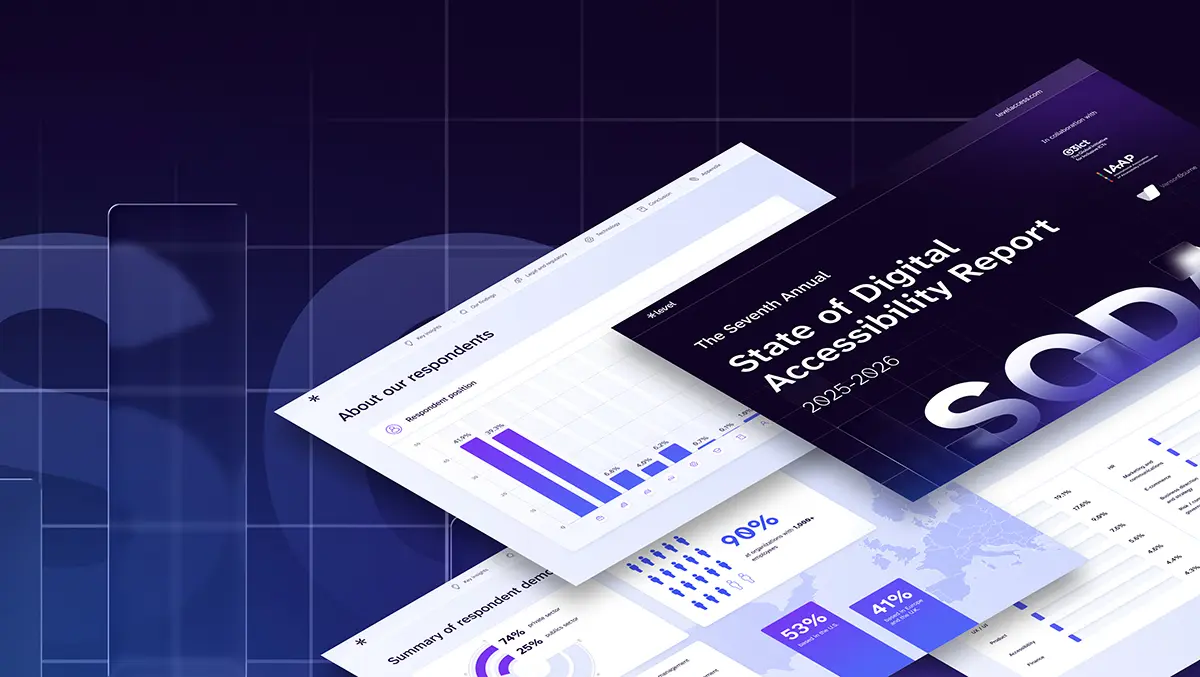

New research indicates a significant connection between digital accessibility initiatives and positive business outcomes. Organisations across the UK, Europe, and the US are increasingly recognising the value of accessible technology in shaping user experience, customer satisfaction, and brand reputation.
Business outcomes
The study, which involved more than 1,600 professionals, found that 91% believe digital accessibility improves user experience, while 90% see increased customer satisfaction and 88% report an enhanced brand reputation. Additional business benefits identified by survey participants include reduced legal risk (86%), competitive advantage (89%), and increased revenue (75%).
The research further suggests that a growing number of businesses no longer view accessibility as a simple compliance requirement.
"While the European Accessibility Act (EAA) has created a focus on the regulations in recent years, it's clear that businesses see accessibility as much more than a compliance box-ticking exercise. There is a recognition that accessibility, when treated as a strategic priority, has the potential to drive innovation, enhance brand perception and deliver tangible financial returns," said Tresilian (Sil) Segal, Chief Marketing Officer, Level Access.
Investment trends
Most organisations (77%) surveyed now report having three core components of a mature accessibility programme: a defined accessibility policy, a person or team accountable for accessibility, and a dedicated budget. Moreover, 68% of respondents expect to either increase or maintain their current spending levels on digital accessibility over the coming year.
Adoption of artificial intelligence tools for accessibility is also increasing. The survey identified that 82% of organisations are incorporating AI solutions into their accessibility strategies. Those with comprehensive accessibility frameworks in place were more than 50% likelier to integrate AI than organisations lacking such measures.
Persistent maturity gaps
Despite these investments, the report highlights a "maturity gap" in implementation practices. Many organisations are not embedding accessibility early in their digital development processes. Only 28% address accessibility during the planning phase of digital projects, and 27% consider accessibility at the design stage, potentially missing opportunities for greater impact.
"Executives are committed to accessibility, at a strategic level, yet many teams remain stuck solving technical issues downstream. They still lack the time, tools and guidance to innovate with disabled users in mind. Accessibility must be prioritised at the start of the digital development life cycle - not just to reduce risk, but to unlock inclusive innovation and ensure organisations can deliver on their promises," said Corbb O'Connor, Director of Accessibility Advocacy, Level Access.
Compliance and leadership
Compliance with accessibility legislation is proving challenging. Among those affected by the European Accessibility Act, only 37% say their organisations are fully compliant, while 35% are still working towards compliance.
The report underscores the role of leadership commitment and employee training in ensuring the effectiveness of accessibility programmes. Organisations with highly supportive leadership are almost seven times more likely to report improved revenue attributable to accessibility efforts. Those with effective training programmes are more than twice as likely to take a proactive approach to accessibility.
"This year's findings reinforce what we've observed across the global business community: organisations that prioritise empowering their workforce with accessibility knowledge and skills unlock measurable business benefits, including improved customer experience. We hope organisations use this data as added motivation to embed accessibility into their cultural practices and business strategy in 2026," said Christopher M. Lee, PhD., CEO, G3ict.