

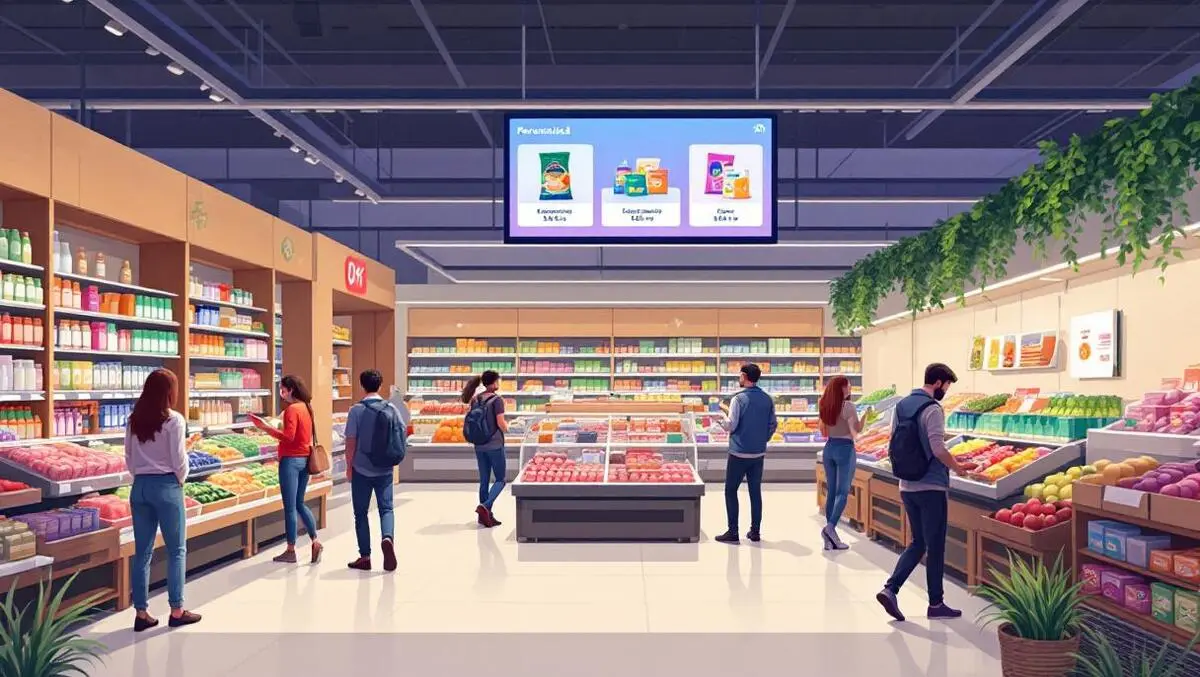
AI & retail media are set to transform UK shopping by 2026
Wed, 19th Nov 2025
UK retail and marketing sectors are preparing for significant shifts in consumer engagement and digital commerce by 2026, as artificial intelligence and new forms of 'agentic' commerce reshape both the opportunities and challenges facing brands and retailers.
Retail media divide
Major UK retailers are adopting advanced retail media strategies that combine first-party data, artificial intelligence, and integration across physical and digital experiences. Brands such as John Lewis, Currys, and Ocado have been examples of networks connecting on-site, off-site, and in-store activity, enabling brands to reach audiences with greater accuracy and measurable outcomes.
However, industry observers note that much of the sector remains focused on foundational capabilities such as measurement, incrementality, and de-duplication. This has led to a widening gap between the most advanced networks and the broader retail market.
"Retail Media has never felt more divided. At one end, networks like John Lewis, Currys and Ocado are setting new benchmarks - connecting on-site, off-site and in-store journeys, and proving that retail media can be a full-funnel growth engine. Their strength lies in uniting first-party data with AI-driven identity, enabling brands to reach real shoppers with measurable outcomes. But the wider market is still catching up," said Esme Robinson, Director of Platform Solutions, Epsilon.
She said, "Many retailers remain focused on the basics: measurement, incrementality, de-duplication. Progress has been slower than perception, and the gulf between the most advanced networks and everyone else is widening fast."
The shift has implications as artificial intelligence moves towards greater autonomy in the shopping process. By 2026, experts predict, AI agents will play a far larger role in making purchasing decisions on behalf of consumers, raising the risk that retailers unable to provide trusted, transparent connections will find themselves bypassed altogether.
"The opportunity in the UK is clear. Retail Media that connects real identity, activation and outcomes won't just survive in the age of automation, it will power it. Those who close the maturity gap now will define what Retail Media means next; not just another channel, but the connective tissue of modern commerce," said Robinson.
Discovery and AI
AI-powered search tools are altering traditional methods of product discovery, with recent research showing a majority of consumers now use AI tools to supplement their search activities. As consumers increasingly rely on instant answers generated by AI, marketers face challenges in reaching new audiences, while traditional search engine optimisation (SEO) becomes less effective.
Alternative channels such as connected TV, audio, and social media, while unaffected by changes in search habits, remain areas where advertising can struggle to capture attention due to repetitiveness or a lack of personalisation.
"AI-driven search is already changing how information is discovered. According to research, 72% of people already use AI tools for search, often to complement other search methods. With access to instant answers replacing traditional search and exploration, this means that SEO is more challenging for marketers and narrowing their opportunities to reach new audiences," said Shannon Millard, VP Platform Services, Epsilon.
Millard said, "Marketers will need to move beyond the intense competition around keywords and pivot from context-led to people-led campaigns. But relevance is critical, focusing on the person by using transactional and loyalty data to connect behaviour with interests."
Protecting consumer choice
The rise of AI-powered 'agentic commerce', where intelligent systems make purchasing decisions for consumers, is prompting concerns about the erosion of consumer choice and the ability of retailers to maintain their role in a rapidly evolving supply chain.
Millard outlined the risks: "Agentic commerce promises frictionless efficiency. AI can now remove the very step of making a purchase. But what happens when the agent becomes the shopper? Will people be happy with the things it chooses, or find themselves in loops of repeat purchases that narrow variety?"
As platforms potentially take over fulfilment and logistics, Millard noted the possibility that the traditional retail role could be diminished to that of a storage facility.
"Choice must remain the counterweight. Consumers will always want the freedom to explore, compare, and take pleasure in discovery, whether through a conversation with an AI tool or time spent browsing in-store. The challenge now is to design AI ecosystems that protect that agency, ensuring automation enhances, rather than erases, the experience of choice," said Millard.