Risk Management stories
Longer dwell times and rising ransomware threats are exposing gaps in industrial defences, despite better OT visibility and governance.
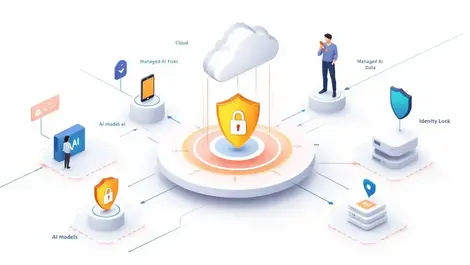
The wider partnership push aims to help enterprises control AI risk across cloud, identity and data systems as deployments move into production.
Audit trails for AI-generated code could get easier as the plugin exposes packages, dependencies and provenance inside Claude Code.
Governance fears and skills gaps are pushing businesses to deploy agentic AI in secure systems while protecting staff from disruption.
Periodic penetration tests miss most systems, prompting Australian and New Zealand firms to use AI-driven checks for broader coverage and faster risk spotting.
The alliance aims to help enterprises curb security and recovery risks as AI agents write and deploy code more widely.
Yet live deployments are causing headaches for engineering teams, with most respondents reporting more incidents and heavier rework after AI code goes live.
Phishing in workplace chat is prompting firms to harden Microsoft Teams as attackers increasingly exploit trusted internal messaging tools.
The move aims to speed up software-defined operations for banks, carmakers and manufacturers as AI takes a bigger role in engineering.
Security teams gain rollback and policy controls as autonomous Claude agents begin writing and deploying code at machine speed.
More than 65 per cent of Infoblox customers were found querying domains linked to residential proxy networks, widening risks for defenders.
Most financial institutions now see unsanctioned AI use as a business risk, with 86% of IT executives warning of weak oversight.
Businesses could soon verify and charge AI agents in milliseconds at the network edge, as autonomous traffic becomes harder to trust or block.
The update gives service providers new AI controls and a simpler billing model as demand grows for outsourced security governance.
Regulated firms can now run GitLab's DevSecOps platform on Google Cloud with partner management, tighter data residency controls and new Gemini models.
Fans at the 2026 FIFA World Cup face heightened cyber risks on public Wi-Fi, as ExpressVPN gains exclusive supporter rights across three regions.
Agentic AI, zero-day surge, sovereign cloud, and humanoid robots will define IT strategy in 2027, Info-Tech Research Group warns.
The certification could help Spectrum win government and enterprise contracts, after it cut the usual ISO 27001 timetable and costs sharply.
New AI and quantum threats are shrinking defenders' response time, forcing Australian organisations to map exposure across interconnected systems before attacks hit.
Tighter US compliance rules are pushing subcontractors to replace spreadsheets with mobile tools for payroll, safety records and site documents.