

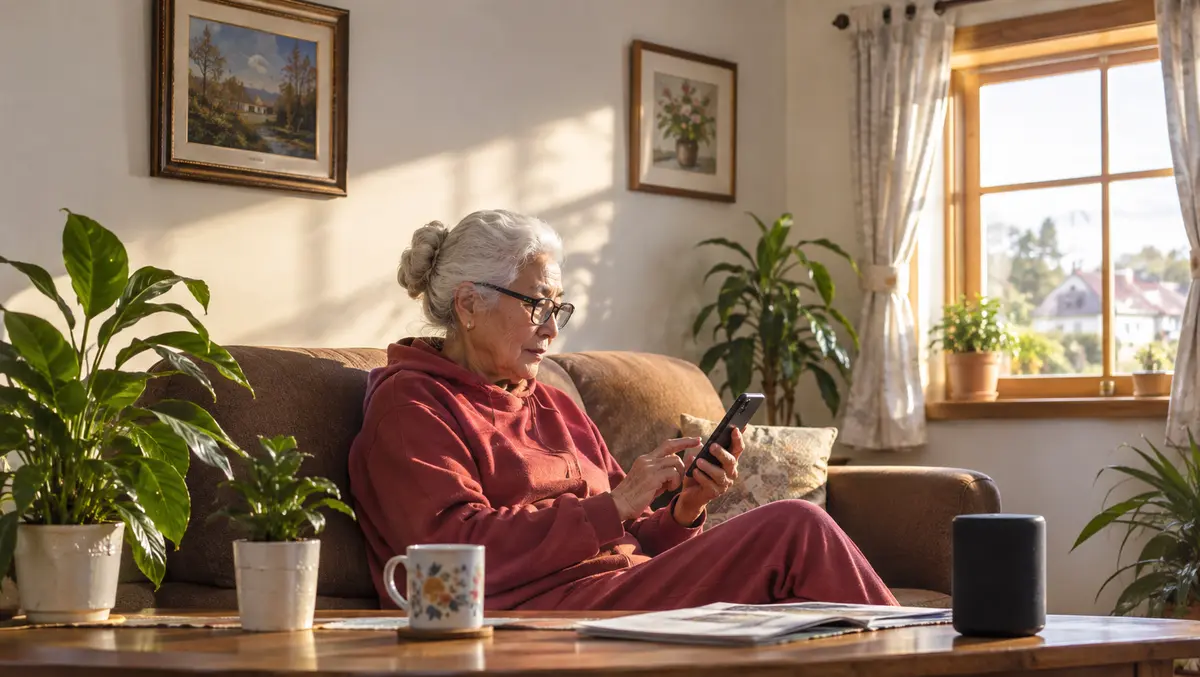
Staffordshire trials Alexa calling service for residents
Wed, 18th Nov 2026 (Today)
Staffordshire County Council has begun a trial of an Amazon Alexa-based voice and telephony service for residents. The scheme is described as the first UK deployment of an Alexa two-way calling service with dedicated UK phone numbers.
The trial uses NetXSmartLink from Britannic and Vocala and is intended to help people remain in their own homes for longer. Moorlands and South Staffordshire district councils are supporting the project, which runs until March 2027.
The service combines Amazon Alexa, Vocala's Flo device management platform and Britannic's communications technology. It is aimed at residents who may struggle with conventional devices, including people with arthritis, reduced dexterity or poor eyesight.
Users can make calls using voice commands, receive medication and hydration reminders, and access local information and entertainment. The system is pre-configured for individual users and managed centrally, reducing setup difficulties and allowing problems to be resolved remotely.
The council is using the trial to assess whether the technology can reduce loneliness, social isolation and digital exclusion, particularly among older people and residents in rural communities. These groups can face barriers to staying in touch and accessing services when mobility is limited or distances are greater.
One resident involved in the trial described the device's practical benefits for daily use. "I love it. It's better than a mobile and really helps as I have arthritis in my hands and I don't have to hit any keys or touch anything. I just speak to it."
The scheme comes as local authorities and telecoms providers prepare for the national digital switchover, which will move many services away from traditional analogue phone lines. The transition has raised concerns about how older and vulnerable people will adapt to new forms of communication.
Andrew Mynors, Cabinet Member for Connectivity at Staffordshire County Council, said the trial forms part of a wider effort to help residents live independently. "It's a priority to the county council to support people to live independent and fulfilling lives for as long as possible and this digital solution is helping us to achieve this, particularly in rural or more isolated areas. We understand that the national digital switchover next year, which the county council has been raising awareness of, could prove to be challenging for many older and vulnerable people. This solution provides an easy and invisible transition to digital communications. Another strength is that the solution comes pre-configured, so it relieves the person of a complicated setup, and if there are issues, they are solved instantly because it is centrally managed. We look forward to more positive feedback from the trial."
The project reflects growing interest among councils in using voice-operated technology to support adult social care and independent living. For residents who find touchscreens, keypads or small buttons difficult to use, voice access can offer a simpler way to communicate with relatives, carers and local services.
In rural parts of Staffordshire, where residents may live far from family, community facilities and public services, the ability to place calls easily could be particularly important. The technology may help users stay connected and maintain regular routines at home.
The trial is also aimed at people who may be digitally excluded because they are unfamiliar with newer consumer technology. By supplying a pre-configured device rather than requiring residents to install and manage software or hardware themselves, the council is testing whether support can be widened without adding complexity for users.
Britannic and Vocala are providing the systems behind the trial, with Vocala's platform handling device management and Britannic's technology supporting the telephony element. The key feature, according to the council, is the ability to offer two-way calling through Alexa with a dedicated UK number, rather than relying only on app-based or consumer account-based communications.
Age UK reported last December that more than 1.5 million older people would spend Christmas alone, a figure that sharpened attention on loneliness among older residents. Staffordshire's pilot is testing whether a voice-led communications service can offer a practical way to reduce some of that isolation for people living at home.