

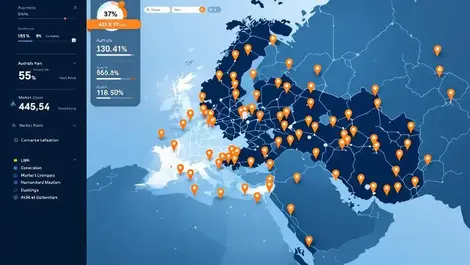
GapMaps partners with Panolytica on segmentation data

GapMaps has partnered with Panolytica to supply consumer segmentation data across Australia, the UK and Saudi Arabia, expanding the Melbourne company's data offering in all three markets.
The deal gives GapMaps customers access to Panolytica's segmentation model through the Data Marketplace for use by marketing, analytics and network planning teams. The data can also be integrated into GIS, business intelligence and CRM systems, with access through GapMaps Live due later this year.
UK-based Panolytica builds its datasets on 100m by 100m grids rather than the broader geographic units used in many traditional segmentation products. Its model produces between 30 and 50 consumer segments in each country and is designed to reflect factors including age, affluence, family status, buying behaviour and brand preferences.
The partnership adds another dataset to GapMaps' existing information on demographics, visitation and points of interest. The company sells location intelligence data through its software platform and through direct data services for integration into other systems.
Granular data
The tie-up reflects growing demand from retailers, service providers and property teams for more localised information when selecting sites or planning marketing campaigns. Finer geographic detail can help businesses compare neighbourhoods, assess local demand and identify customer differences within postcodes or larger catchments.
The shift towards smaller grid-based analysis also reflects broader market changes, as businesses seek datasets that update more frequently and fit into existing internal tools rather than sit in standalone products. Panolytica's data is available immediately to GapMaps' Data-as-a-Service customers.
Later this year, the data will also be visualised within GapMaps Live alongside demographics, visitation and point-of-interest information. This will allow users to compare segmentation profiles with movement patterns and local amenity data in a single environment.
Founded in 2013, GapMaps says it works with more than 500 brands across Asia-Pacific, the Middle East and North America. Its customer base includes organisations that use location intelligence for expansion planning, market analysis and local decision-making.
Founders' background
Panolytica was founded by Martin Taylor and chief data officer Alex Hill. Both previously worked on data products at Experian and were involved in the deployment of platforms including Mosaic and Worldview.
The founders' background is relevant because consumer segmentation remains a competitive niche within the broader data industry. Established products have long been used by retailers, financial services groups and consumer brands to classify neighbourhoods and target communications, while newer entrants have tried to differentiate themselves through more current datasets, smaller geographic units and machine learning methods.
Martin Taylor described the deal as an important step for the business. "This partnership with GapMaps marks a significant milestone for Panolytica. By joining forces with a market leader, we can deliver next-generation segmentation data to more organisations than ever before - helping them make faster, sharper and more confident decisions at a truly granular level. Our combined strengths will enable customers to unlock greater value from their data, wherever they operate," he said.
GapMaps' data business is led by head of DaaS Rob Villanti, who said the additional segmentation layer would sit alongside the company's other datasets for customers using its direct data services. "We're thrilled to collaborate with Panolytica to provide our clients with access to market-leading segmentation. By making this data available across Australia, KSA and the UK - alongside complementary datasets we provide to DaaS customers, including demographics, point-of-interest and visitation data - we're equipping marketing, analytics, product and network planning teams with the tools to better understand their customers, target more precisely, and optimise decision-making like never before," he said.